
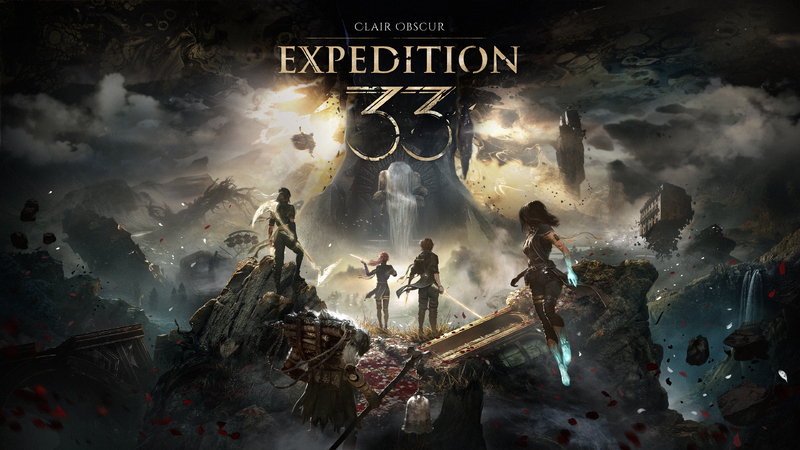
Clair Obscur: Expedition 33 transports you to a magnificent yet dark fantasy world, clearly inspired by the French Belle Époque. Elegance meets decay. In this world, the mysterious Paintress captures death in her paintings – and makes it a reality. Every year, an event called Scrub an entire age group. Nobody knows who will be next.
The mission of Expedition 33
You lead the volunteers of Expedition 33. Your goal remains clear and relentless: to stop the painter before she completes her deadly work once more. The journey takes you through abandoned mansions, mist-shrouded forests, and vibrant, yet menacing cities. Along the way, you'll encounter allies, bitter enemies, and creatures that seem like nightmares come to life.
A combat system with depth
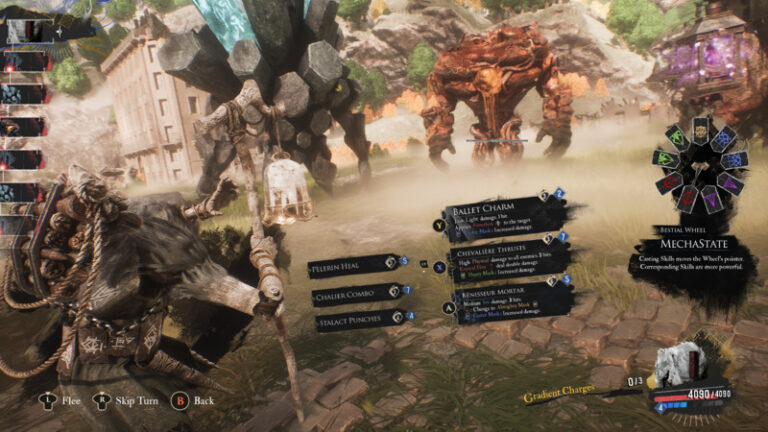
Clair Obscur: Expedition 33 combines turn-based combat with real-time elements. Attacks, dodges, and parries demand precise timing. Every decision counts, every lapse in concentration is punished. Strategy and reaction seamlessly intertwine, giving the battles an unusual dynamism.
Characters with personality
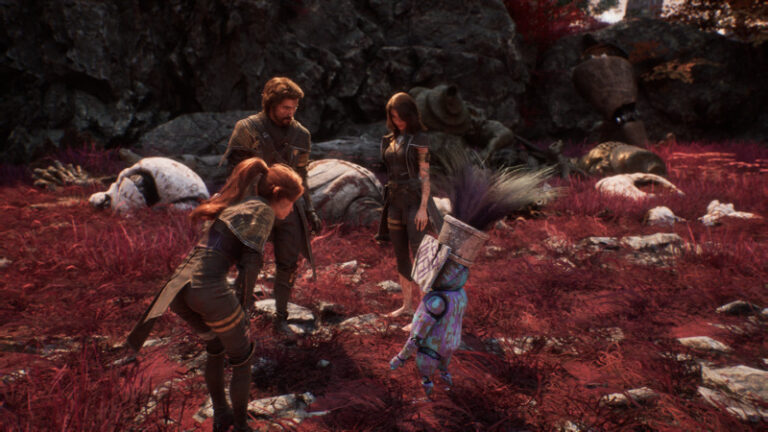
Alongside you are characters with distinct identities and their own stories. You'll meet Gustave with his mechanical arm, the sorceress Lune, the determined fighter Maelle, and the quiet, thoughtful Sciel. Each character brings unique abilities and influences not only the battles but also the course of the story.
Technical brilliance
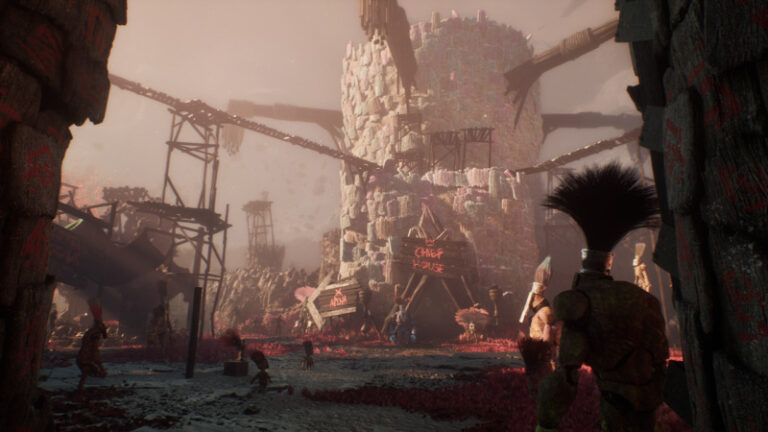
The Unreal Engine Version 5 lends the game world an impressive level of detail. Light and shadow, colors and architecture enhance the Belle Époque aesthetic and underscore the contrast between beauty and decay. The presentation is consistently cinematic and carries the emotional weight of the narrative.
Music that gets under your skin
The soundtrack combines orchestral grandeur with melancholic motifs. Vocal passages and dynamic transitions accompany both intense battles and quiet, contemplative moments. The music noticeably enhances the atmosphere and firmly establishes many scenes in the memory.
One number brings death
In the center of Clair Obscur: Expedition 33 There is a simple, cruel rule. Once a year, the painter writes a number on a massive monolith. All people who have reached that age instantly vanish into thin air. This event is called ScrubThe cycle once began at the number 100. Now it has reached 33. No one in this world lives longer than 33 years. Mortality is not an abstract concept, but a fixed date.
The rupture and a broken world
Since the so-called Fracture, the world is no longer intact. Landscapes are shattered, islands float weightlessly in the sky, and debris defies gravity. This physical destruction reflects the world's inner state. Reality appears fragile, dreamlike, and detached. Clair Obscur uses this surreal backdrop not only as a stylistic device but also as a constant reminder that nothing is whole anymore.
Lumiere as a last refuge
The survivors live in the city. LumiereIt is both a sanctuary and a prison. Here, people await their inevitable end, while the painter remains visible as a gigantic figure on the horizon. Lumière gives the story a human center. Hope, fear, everyday life, and farewell exist side by side here, providing the world with emotional grounding.
The painter as an omnipresent deity
The painter is more than an antagonist. She acts like a deity, arbitrarily determining life and death. Her presence is constant, visible, and inescapable. She does not judge in secret, but openly. This divine distance intensifies the feeling of powerlessness and raises the question of whether resistance is even worthwhile.
Gommage Day as a turning point
At the start of the game, you experience Gommage Day firsthand. For many residents, it marks the end; for Gustave, it's the beginning. His journey begins with loss and the certainty of impending death. This moment emotionally anchors the story and makes it clear that every action stems from personal necessity.
The tradition of expeditions
Since the appearance of the painter, selected warriors in the last year of their lives have set out each year. These expeditions are driven not by glory, but by desperation. The goal remains the monolith and the truth behind the painter. No expedition has yet returned successfully. 33 Expedition It joins a chain of failed hopes and has carried this burden with it from the very beginning.
A story in three acts
The narrative follows a clear three-act structure. It combines classic adventure travel with a strong philosophical dimension. Themes such as death, grief, the search for meaning, and suicide permeate the story. Skillfully employed humor provides brief respites without disrupting the overall mood. Clair Obscur remains melancholic, contemplative, and emotionally consistent.
The existential depth of Clair Obscur
Only these elements give Clair Obscur: Expedition 33 Its unique power lies in the number, the break, Lumiere, the rituals of the expeditions, and the ever-present finitude, all of which combine to form a game that is not merely played, but lived. It is not about defeating evil, but about dealing with the inevitable.
Characters that instantly create a sense of connection
The history of Clair Obscur: Expedition 33 The story thrives on its characters. They are meticulously written, believable, and emotionally relatable. Each character brings their own quirks, inner conflicts, and understandable backstories that quickly draw you in. The dialogue feels natural, sometimes humorous, often painfully honest. This creates a powerful connection that carries the story emotionally.
Outstanding voice acting
The characters' impact is largely due to the excellent voice acting in both French and English. The voices lend the characters depth, nuance, and personality. Many moments gain weight simply through emphasis and pauses. The voice acting is clearly one of the game's strongest elements.
Familiar voices, powerful roles
Gustave, the technically gifted inventor with his special arm prosthesis, is called Gustave in English by Charlie cox Voiced by the character known as Daredevil from the Marvel Universe. His portrayal lends Gustave calm, melancholy, and determination.
Maelle, his adopted daughter, sets off on the expedition at the young age of 17. She seeks freedom, experience, and an escape from the bleakness of Lumière. Her voice is provided by Jennifer English, known from Baldur's Gate 3, and lends the character curiosity, courage and vulnerability at the same time.
Other roles are played by well-known names such as Andy Serkis and Ben Starr This casting elevates the entire ensemble to a remarkably high level.
Cinematic interludes
Throughout the game, you'll experience elaborately staged cutscenes that strongly resemble cinematic productions. The cinematography, editing, and direction are consistently high-quality and cohesive. What's particularly surprising is that Clair Obscur is a small studio with fewer than 40 employees. The quality of the cutscenes rivals that of major AAA productions.
Production on par with a television series
The cutscenes reach a level of quality that makes it easy to imagine entire films or series being made in this style. Emotional high points, quiet dialogue scenes, and dramatic twists are visually stunning and contribute significantly to the story's impact.
A key highlight of the game
The roughly 30-hour main story, along with the characters, voice acting, and cutscenes, is among the game's greatest strengths. Clair Obscur: Expedition 33These elements mesh together perfectly, forming a narrative foundation that captivates the player for an extended period. Combined with the exceptional combat system, this creates a complete package that far surpasses classic role-playing game standards.
The best combat system in the genre
The combat system of Clair Obscur: Expedition 33 This forms one of the strongest pillars of the entire game. Throughout the adventure, you'll face a multitude of monsters, appearing alone or in groups, each with distinct abilities, strengths, and weaknesses. Hardly any two battles are alike, ensuring that every encounter remains exciting.
Tactics instead of a mindless sequence
Especially battles against multiple opponents demand strategic thinking. Monsters strengthen each other, erect shields, or attack in rapid succession. Target priority often determines victory or defeat. Ill-considered attacks quickly lead to frustrating situations where opponents barely take damage or overwhelm you with chain attacks.
Nevrons as surreal nightmares
The design of the opponents, the so-called Nevrons, is one of the most creative aspects of the game. Its appearance is surreal, disturbing, and at times reminiscent of creatures from Dark Souls or BloodborneImportant: All enemies are visible at all times. Random encounters, as found in classic JRPGs, do not exist. You can deliberately engage in battles or avoid them.
Group composition with consequences
Your party grows steadily throughout the story. You start with Gustave and recruit a total of five more companions. While the narrative always involves the entire party, you only take three pre-selected characters into battle. You can adjust this selection at any time outside of combat. If all three fighters fall, the remaining characters step in and take over the fight.
Turn-based with player freedom
The battles are classic turn-based. On your turn, you choose from various actions:
- normal weapon attacks
- Abilities with limited action points
- Elemental spells, combos, and curses
- Use of items such as healing potions
- Targeted shots at weak points
Manually targeting weak points with firearms adds an extra tactical layer to the game.
Timing determines success
Many abilities require precise timing. During execution, you must hit QuickTime prompts exactly. Perfect hits inflict bonus damage, while poor timing can cause abilities to fail completely. This keeps every action exciting and demands your full attention.
Real-time during the opponent's turns
The combat system's greatest strength lies in its real-time elements during enemy attacks. You don't sit passively, but react actively. Attacks can be dodged or parried, but without a simplified blocking mechanism. You have to read enemy patterns, recognize movements, and react at the right moment. Later battles, in particular, with their rapid attack combinations, demand the utmost concentration.
Risk, reward, and spectacular counterattacks
If your evasive maneuvers and parries fail, you'll take heavy damage. However, if you successfully parry an enemy attack, a powerful counterattack follows. These counterattacks not only feel incredibly satisfying but are also visually stunning. They are among the emotional highlights of every battle.
Animations of the highest quality
All battles benefit from outstanding animations on both sides. Attacks, abilities, monster movements, and counters look spectacular and retain their impact even after many hours of play. Every encounter feels dynamic and alive.
A genre milestone
The combat system of Clair Obscur: Expedition 33 Impressive from beginning to end. It remains motivating, challenging, and creative, and is among the best systems the genre currently has to offer. The Japanese role models should take note – because this system sets new standards.
Individual systems instead of standardized roles
In Clair Obscur: Expedition 33 No character feels like a mere variation of a basic type. Each party member possesses their own clearly defined skill system, resulting in a distinct gameplay experience. This noticeably alters the combat style as you adjust your party composition.
Gustave and the Power of Lightning Charges
Gustave uses his mechanical arm not only as a narrative device but also as a central gameplay system. He charges up lightning energy that builds up over several actions. The higher the charge, the more powerful his abilities become. Timing, planning, and the correct discharge determine how effective Gustave is in combat.
Monoco and the Power of Transformation
Monoco brings one of the most unusual systems to the game. He can literally steal the legs of monsters and transform into them. This grants him access to their abilities, attacks, and characteristics. This system opens up enormous tactical possibilities, as you can use your opponent's strengths against them.
Character playstyles with a clear identity
Each character follows its own logic. Abilities intertwine, build upon one another, or require deliberate restraint. This creates not only variety but also genuine freedom of choice. You adapt your strategy to the characters, not the other way around.
Special attacks as a tactical turning point
Later in the game, the characters unlock powerful special attacks. These attacks can only be used rarely, but can turn the tide of entire battles. They don't serve as mere damage boosts, but as targeted tools for critical situations.
Lune's control over the battlefield
The mage Lune demonstrates the power of these special abilities particularly impressively. She summons massive roots from the ground that severely damage and simultaneously stun enemies. Such abilities prove essential, especially in challenging boss fights, for applying pressure or bridging dangerous phases.
Depth through character diversity
The individual systems ensure that battles never follow a predictable pattern. You experiment, combine abilities, and develop your own style. Clair Obscur: Expedition 33 In this way, it manages to make character development noticeable not only narratively, but also in terms of gameplay mechanics.
Diverse progression as a supporting pillar
The progression in Clair Obscur: Expedition 33 It is deep, multifaceted, and intricately interconnected. Every battle won earns experience points, which allow your characters to level up. With each level increase, you receive three attribute points, which you can freely allocate to your characters. Vitality, strength, agility, luck and defense You distribute your resources. Additionally, you unlock skill points to activate new skills. This ensures that character development remains noticeable and individually controllable at all times.
Weapons, upgrades, and active perks
Besides character attributes, weapons play a central role. You can find new weapons in the game world, and existing weapons can be upgraded using crafting resources. These upgrades not only increase damage but also unlock additional perks at certain levels.
Such effects can weaken enemies, inflict additional damage, or create direct synergies with certain characters. For example, the mage Lune starts with an elemental charge that she would otherwise have to build up during combat. Weapons thus influence playstyle much more significantly than pure damage values.
Pictos as the heart of the builds
The greatest influence on your characters is due to the so-called PictsThese are magical essences that you find in the world and equip. Each character can carry up to three Pictos at a time.
Pictos not only grant powerful attribute bonuses, but above all, unique perks. Examples include effects such as... Life-robbing, which returns a portion of the damage caused as life points, or Second chance, which revives a character once after death. The variety of these effects opens up enormous tactical possibilities.
Luminas and shared effects
If you wear a Picto across multiple battles, it will create a Lumina Hair CareAfter four victories, its perk is permanently unlocked. Luminas do not contain attribute bonuses, but they can be equipped independently of the Picto slots and even used by multiple characters simultaneously.
The system allows you to distribute particularly strong effects team-wide and to further refine builds.
The Lumina value as a limit
Luminas are tied to a specific value. Each character has a Lumina limit that increases with each level and can be further increased by special items. Depending on its strength, a Lumina costs anywhere from a few points to several dozen. This creates a tension between powerful effects and limited resources.
Complexity with minor weaknesses
The sheer number of Pictos, Luminas, and Perks strongly encourages experimentation. At the same time, the system demands a fair amount of micromanagement. Menus can be confusing at times, comparisons require frequent switching between windows, and over a hundred unlockable Perks can quickly become overwhelming.
Nevertheless, the appeal of constantly trying out new combinations and perfecting one's own builds outweighs the drawbacks.
Balance and difficulty levels
Those who consistently utilize all systems will become very powerful in normal gameplay. Even strong opponents will fall quickly. The game addresses this through different difficulty levels. High difficulty demands full use of all mechanics, while normal difficulty is more forgiving and primarily challenges boss fights. Story mode is aimed at players who want to experience the adventure without much pressure.
The camp as a social hub
You can access your camp at any time via the world map. Here you manage attributes, skills, equipment, and items. The camp also serves as a place for rest and interaction. Conversations with party members not only provide background information but also deepen relationships. As these relationships improve, some characters even unlock new abilities.
Small details with a big impact
Additionally, you can have diary entries written at camp or play found records. This allows you to consciously enjoy the soundtrack and deepen your emotional connection to the world. These quiet moments provide a deliberate contrast to the intense battles and atmospherically round out the progression system.
A shattered world to marvel at
The path to the monolith leads you across a large world map, which you explore in an isometric view. On it, you'll find not only monsters and secrets, but also the central story areas as well as numerous small and medium-sized optional areas. The world map serves as a connecting element, conveying the feeling of a cohesive yet fragmented world.
Movement and new paths
As you progress through the game, you unlock new ways to travel. These not only allow for faster travel but also open up previously inaccessible areas. This creates a satisfying sense of growth and discovery, motivating exploration and revealing familiar regions in a new light.
From overview to proximity
As soon as you enter an area, the perspective switches to third-person view. You can expect mostly linear level structures, occasionally offering small branching paths. These areas are initially quite impressive, but the effect of the constantly "broken" world becomes somewhat tiresome later on. The surreal distortion of the world loses its initial appeal over time.
Optics: Between aspiration and reality
Overall, Clair Obscur remains a very beautiful game, but on consoles it doesn't consistently achieve the visual opulence of the trailers. Especially in open-world sections, textures and details sometimes appear somewhat dated. This impression is amplified in certain areas, even though the lighting and scenery remain impressive.
Orientation as a conscious challenge
Some areas prove to be confusing. Paths are only faintly distinguishable from one another, and a map view within the areas is completely absent. The game thus forces you to explore carefully, much like Dark Souls. Jumping, climbing, and using a grappling hook expand the navigation options, but the controls feel rather utilitarian and occasionally somewhat clunky when jumping.
Resting places and risk
Within the levels, you unlock shortcuts and flags. These serve as rest points where you can allocate attributes, learn skills, and replenish consumables. The price: defeated enemies respawn. The system creates tension between progress and risk, demanding conscious decisions.
Impressive scenery
The game constantly rewards you with stunning visuals. The iconic Eiffel Tower, impressively staged Ferris wheels, and spectacular lighting effects are sure to leave a lasting impression. The world design is heavily influenced by French culture and turn-of-the-century architecture, a central focus for the Montpellier-based studio.
Variety on a large scale, monotony on a small scale.
While individual areas appear quite uniform, the game as a whole offers a diverse range of biomes. Dreamy forests, battlefields littered with bodies, underwater areas, and snow-covered mountains provide global variety. Within each area itself, however, the variety remains limited.
A backdrop instead of a living world
The game world primarily serves as a stage. Aside from combat, weapons, crafting materials, and a few collectibles, you'll encounter hardly any interactive NPCs or deeper side quests. Most of the optional content ultimately revolves around combat scenarios in various forms.
Minor exceptions and minigames
Occasionally you'll come across minigames, such as a kind of volleyball or a high ropes course in the style of Only Up. These variations are infrequent and, due to the rather utilitarian motion controls, don't feel particularly well done.
Endgame and long-term motivation
After completing the main story, additional endgame content unlocks. This includes the Endless Tower with its successive combat challenges and optional superbosses. These areas also reveal further backstory, including additional cutscenes. With all the side activities, the playtime easily reaches around 60 hours. A New Game Plus playthrough then offers greater challenges and exclusive loot.
Technical implementation
Tested on PS5 Pro, PS5, and Xbox Series X, the game proved to be technically stable. No major bugs or noticeable performance drops occurred. You can choose between a quality mode at 30 fps and a performance mode at 60 fps. Clair Obscur benefits particularly from the additional processing power on the PS5 and appears even smoother in both modes.
Conclusion
Clair Obscur: Expedition 33 proves to be a genuine surprise and an impressive debut from a studio that has only existed for a few years. Despite minor technical and structural flaws, you can feel the courage, stylistic awareness, and passion poured into this game every minute. The melancholic, philosophical story captivates from beginning to end, the characters quickly grow on you, and their impact remains undiminished even after many hours of gameplay. The combat system, in particular, stands out: tactically deep, challenging, and incredibly satisfying. It seamlessly blends turn-based planning with active reaction, easily placing it at the forefront of the genre.
At the same time, Clair Obscur is not without its critics. Aside from the central storyline, the world offers few narrative side paths, and gameplay variety arises almost exclusively from combat and build optimization. Those seeking a vibrant world brimming with optional stories might find it lacking. Nevertheless, the positives clearly outweigh the negatives. The game proves that classic role-playing game ideas can still resonate today when implemented with a unique identity, strong presentation, and modern systems.
Ultimately, Clair Obscur: Expedition 33 is an exceptional role-playing game that emotionally engages you, challenges you with its gameplay, and leaves a lasting impression. Whether as a Game Pass experience or at a comparatively fair purchase price – if you have even a passing interest in turn-based RPGs, you shouldn't miss this journey. For many, it's already one of the strongest genre experiences of recent years and a title that will permanently put Sandfall Interactive on the map.
Go to the official game page on Steam
More articles on Games and Poetry: Runaway: A Road Adventure


